From Ancient Oracles to AI: Oxford ethicist's new book
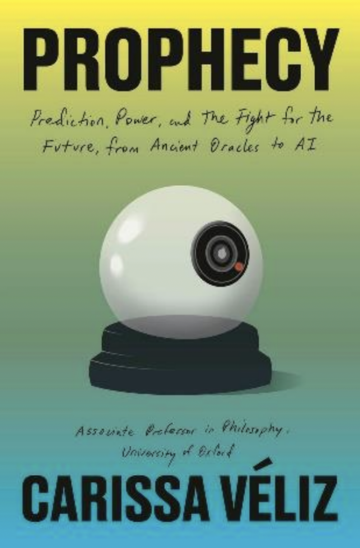
Today’s computer scientists play the same role as the oracles of the ancient world and the astrologers of the Middle Ages. Modern predictions not only advise on war, crop output, and marriages, but algorithms and statisticians also now determine whether we can get a loan, a job, an apartment, or an organ transplant. And when we cede ground to these predictions, we lose control of our own lives.
A new book by an Oxford University ethicist looks at the many ways prediction shapes our everyday lives, Carissa Véliz of the Institute for Ethics in AI and Faculty of Philosophy explains how putting too much stock in others’ predictions makes us vulnerable to charlatans, con artists, dubious technology, and self-deception.
Examining a wide range of subjects both personal and societal, including medicine, climate, technology, society, and others, Professor Véliz argues that:
- Predictions about humans tend to be selffulfilling
- More data doesn’t guarantee better outcomes
- AI is more likely to increase risk than decrease it
- A free and robust society requires not more prediction, but better preparation
Carissa Véliz is an Associate Professor at the Faculty of Philosophy and the Institute for Ethics in AI, as well as a Tutorial Fellow at Hertford College, at the University of Oxford. Her first book, Privacy Is Power, was an Economist book of the year and has been translated into seven languages.

